
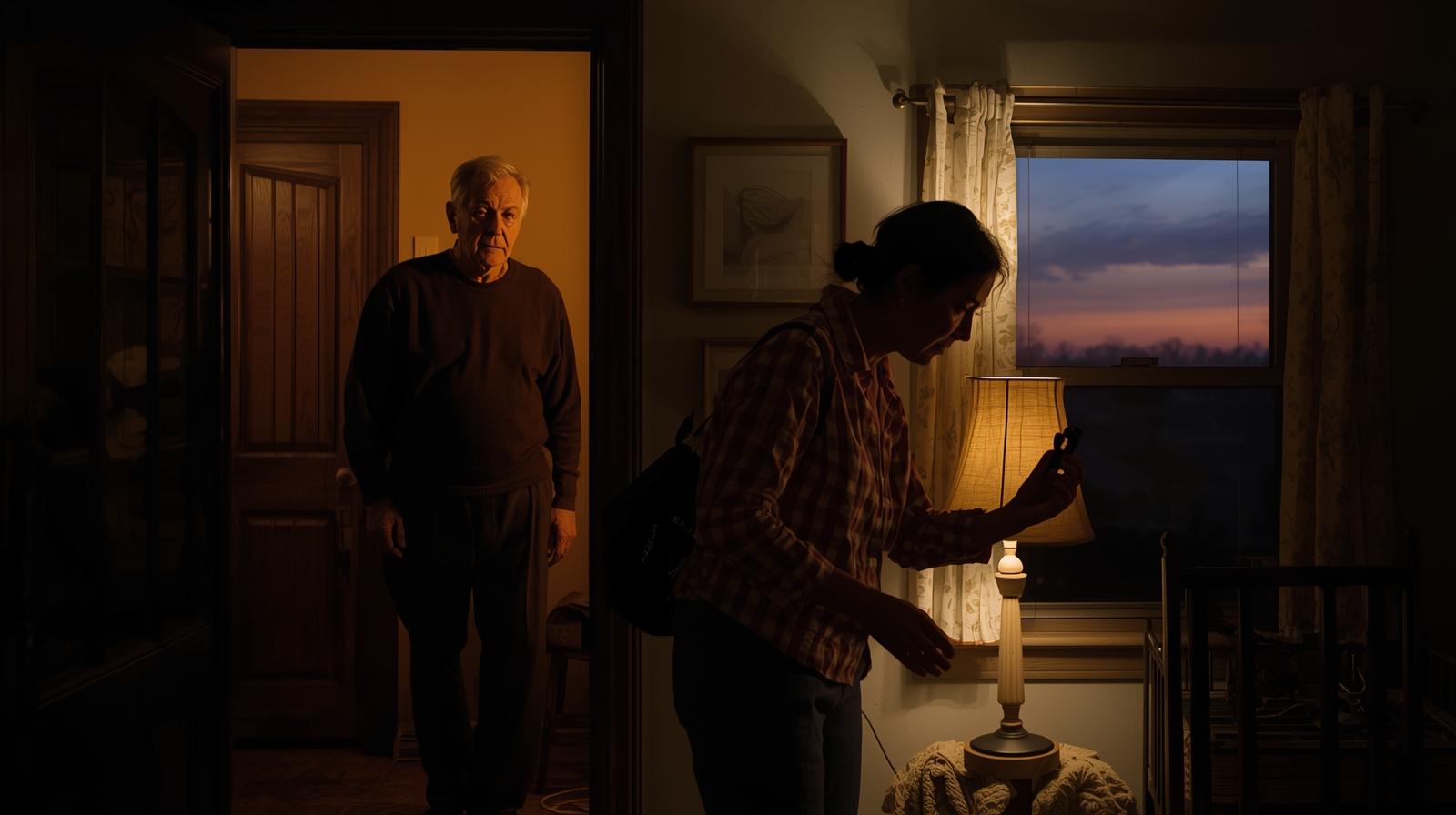
I am writing a book called Prepared, Not Surprised. It is the first in a series about dementia caregiving, and its entire purpose is to lay out what is coming so you are not blindsided by it. There is a chapter on sundowning. I researched it. I wrote about it. I have watched other families deal with it.
Last night, in my own bedroom, I finally recognized sundowning in my own wife. It took me days to see what was right in front of me.
Gail and I just celebrated our 29th wedding anniversary on February 7th. For four years now, she has been living with dementia. I am her husband and her caregiver, and I have made it my work to understand this disease inside and out. I built AtendaCare (Atenda.Care) around the idea that if caregivers know what to expect, they will be better equipped to handle it. I believe that. I still believe that. But I am also living proof that knowing and seeing are two very different things.
Signposts in the Fog
Years ago, I wrote a piece about real estate that I called “Signposts in the Fog.” The idea was simple: the signs are always there, but when visibility is low, you drive right past them. Dementia caregiving is the foggiest road I have ever been on. I’m reusing the title.
People ask me, and indeed Gail herself has asked me, “When did you first notice that I was getting dementia?” Hindsight, of course, is clearer. In the moment, I did not recognize the signals. Or I ignored them. Or I explained them away as stress, or aging, or a bad day. None of these things happen suddenly. Not the repetitive questions. Not the tremors. Not the difficulty dressing or eating or sorting medicines. And not the sundowning.
The signposts were there. I was driving too fast in the fog to read them.
The Kitchen, the Cocktail, and the Light Switch
Let me walk you through what happened, because it did not happen all at once, which indeed, is the point.
I am an early riser. Mornings are mine. I write, I work on AtendaCare, I think. In the afternoon, I cook. We have a light lunch most days, and normally I prepare dinner to eat around five-thirty to six-thirty. This has been our routine for a long time now.
Gail has an affectation that is common in people with dementia: the tendency to carry things around and not put them down. She will pick up a book that belongs on the shelf, then notice a sweater that needs to be hung up, and before the book or the sweater makes it to where it belongs, she is folding laundry. All while holding the book and the sweater. If you are a caregiver, you have probably seen this. It is one of those small things that seems like a quirk until you understand what is behind it.
During dinner preparation, Gail would come into the kitchen and ask what dishes and silverware to set the table with. She routinely set the table. We normally dine in our suite that is attached to the house when we can’t eat outside, and she was happy to have a task. Gradually, over months, something shifted. She began hanging out in the kitchen. She may have asked about the plates and silverware, but would forget to bring them over to the table. She stayed in the kitchen while I cooked. Not setting the table. Not asking questions. Washing dishes as I dirtied them. Cutting up the Brussels sprouts, a great cook’s helper.
At first, I appreciated it. Then it became a little annoying, because we have a small kitchen and she would be standing exactly where I needed to be standing. So I kept giving her chores to keep her with me. I did not think much of it. I adjusted. She adjusted. Our routine changed but I did not notice it.
The part I did not see clearly until these last few days came after dinner. We would carry our plates back to the kitchen, clean up, and then settle into our bedroom suite for the evening. I might fix a cocktail. We might watch something on television. That is when I began noticing Gail’s restlessness.
She would sit down and ask, “Should I turn that light off?” I would say, “No, honey, it’s fine.” A few minutes later she would get up and walk to the lamp by the curtain. I would say again, “It doesn’t bother me.” She would go back to sitting by her bedside. Then get up and adjust that same curtain. Then into the bathroom and look for something. Come back out. Walk to the counter. Sit down. Get up. Brush her teeth. Sit on the bed. Stand up again. Pick something up. Put it down. Sit. Stand. Repeat.
The agitation was constant, and it was growing. But it came on so slowly, over so many evenings, that I did not name it for what it was.
The Moment It Clicked
Last night, it clicked. Sitting there watching her cycle through the same restless loop, I suddenly heard my own voice from the chapter I had written. Sundowning. Increased agitation in the late afternoon and evening. Difficulty settling. Anxiety around transitions, especially the shift from daytime activity to nighttime routine. Here is the thing: Gail knew there was a routine for bedtime. She could feel it coming. But she could not remember what the routine was, and that uncertainty was driving the agitation. Same thing in the kitchen: she knew there was a routine she was accustomed to following, but she could not remember it.
Sundowning. I had explained it to other caregivers. And I was watching it happen in my own home without recognizing it.
What I Did Next
Here is what I did when I realized what I had been missing. I turned on every light in the room and opened all the curtains. I said, “Honey, let’s not watch TV tonight. Let’s play a game.” She said she was too tired. It was only five o’clock. (We had eaten an early Sunday dinner.)
I laid out the Rummy Q tiles anyway. I asked Alexa to play a Neil Diamond mix. And something shifted.
Gail sat down. She picked up her tiles. I coached her through the opening rules, reminded her how many points she needed to start. And then she played. Not just played. She legit beat me three games out of five. Her whole attitude changed. The agitation dissolved. The restlessness stopped. She was present, focused, and enjoying herself.
After playing the game, we walked out onto the deck and watched the dogs play by the river. Then we came inside, and bedtime happened the way bedtime is supposed to happen. Calmly. Naturally.
What changed? I changed the environment. I replaced the darkening room and the passive television with bright lights, music, and engagement. I did what I have been telling other caregivers to do with their Tended (the person they are caring for). I just did not see that I needed to do it for myself.
The Weight You Don’t Notice
Here is another way to think about this. You do not gain thirty pounds overnight. It happens one pound at a time, over weeks and months, until one morning your pants do not fit or you catch yourself in a mirror and think, “When did that happen?” If you had stepped on a scale every day, you would have seen it at five pounds and made a change. But you did not. And now it is a much bigger effort to correct.
Dementia symptoms work the same way. They do not arrive with an announcement. They seep in. The kitchen hovering starts as helpfulness. The evening restlessness starts as a quirk. The repeated questions start as forgetfulness. By the time you name it, it has been building for weeks or months.
I once wrote an article about Gail and the shower. One morning she stood in front of me, scared, and told me she had forgotten how to take a shower. It felt sudden. It was not. The signs had been accumulating. I just was not reading them.
What This Means for You
If you are caring for someone with dementia, let me tell you something that might be both discouraging and freeing at the same time: no matter how much you study this disease, no matter how many chapters you read or write, you are going to miss things. You are going to look back and say, “How did I not see that?” You are going to feel like a fool. I felt like one last night.
But here is the other side of that truth. The moment you do see it, you can act. Last night, all it took was turning on the lights, laying out a game, and putting on some music. That is it. The intervention was simple. The hard part was recognizing that an intervention was needed.
I will be honest with you about one more thing. I do not journal well. I never have. But I can tell you this: if I had been writing down what I was observing each evening, even a few sentences, I would have noticed this pattern weeks ago. The human eye adjusts to gradual change. A written record does not. It holds the mirror steady. Whether you use a notebook, an app, or a voice memo before bed, find a way to track what you are seeing. The patterns are there, waiting to be read. Sometimes you need something outside your own head to help you see them.
That is why I am writing the book. Prepared, Not Surprised is my attempt to lay out every signpost I can find so you have a better chance of reading them, even in the fog. Chapters on sundowning, on bathing, on nutrition, on dressing, on all the situations that may or may not arise, that may come quickly or may come so slowly you do not notice them. Every caregiver’s journey with their Tended is different, but the signposts tend to repeat. If I can help you recognize even a few of them earlier than I did, the book will have done its job.
One Last Thing
Last night, after the game, after the dogs, after the quiet walk back inside, Gail settled into bed without a single trip to the light switch. She was calm. She was content. She had beaten me three out of five, and I think she knew it. More importantly, there was not a routine she thought she was missing and had to execute.
I lay there thinking about all the evenings I had missed. All the signs I had driven past. And I reminded myself of something I keep telling other people: it is not about being perfect. It is about paying attention. And when you finally see it, doing something about it.
If this sounds like your house, you are not alone. Not even the people writing the book have it figured out.
Gregg
AtendaCare: Preparing Caregivers for What Comes Next
