We Won’t Eat. We’ll Just Have a Snack.
Gail has no appetite anymore. I mean zero.
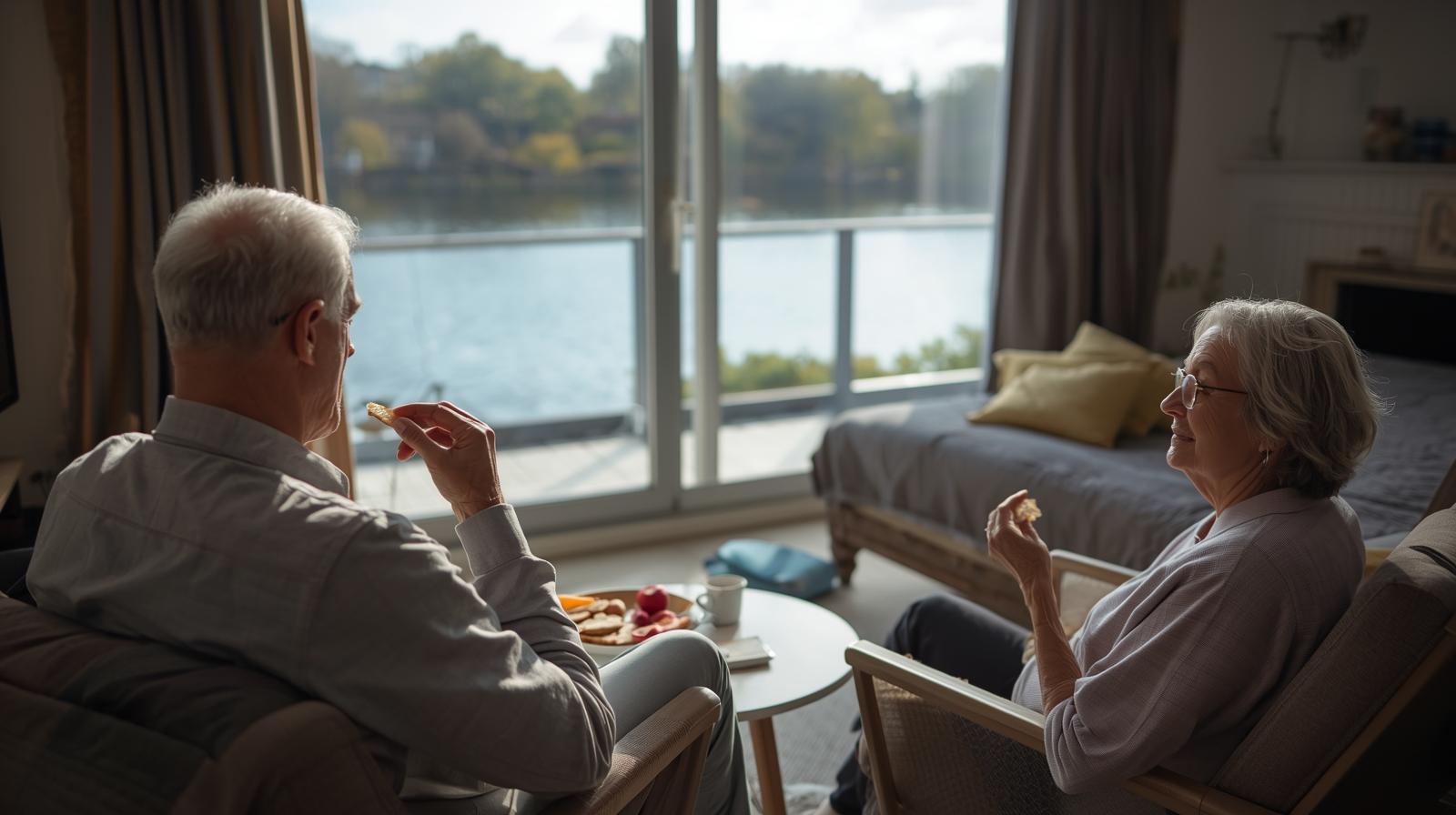
I can set the most delightful table you’ve ever seen—right here at the foot of our bed in the room I built for her four years ago. Large room. River view. Fireplace. Wet bar. Sitting area. Big TV. When the weather turns cold or wet, this is where we live. This is where we eat our meals.
Except lately, she doesn’t want to eat.
She’s not sick. She’s not wasting away. She’s just not burning many calories. Most of her time in this beautiful room is spent in bed, and when I ask if she’s hungry, the answer is always the same: “No.”
So I stopped asking.
Instead, I say, “No sweat. I’m going to make myself a snack.”
I head to the kitchen and come back with what I call a Tapas Plate. Nothing formal. Nothing that looks like a meal. Just small, bite-size versions of whatever I was planning to cook. A few pieces of cheese. Some fruit. A bit of chicken. Maybe crackers. Maybe not. It’s deliberately casual, deliberately low-stakes.
No meal. Just snacks.
Sometimes I sit at our little table and eat while she stays in bed. I don’t make a production of it. I don’t try to coax her or convince her. I just eat my snack and enjoy the view of the river.
But more often than not—sure enough—she joins me.
She doesn’t call it dinner. She doesn’t admit she’s hungry. She just sits down for tapas. A bite here. A taste there. Before long, she’s eaten more than she would have if I’d called it a meal.
I suppose this is one of those small tricks you learn when you’ve been caregiving long enough. You learn that the word “meal” carries weight. It carries expectation. It carries the pressure to perform—to sit up, to engage, to be present in a way that sometimes feels impossible when dementia is rewriting the rules.
But “snack”? A snack is easy. A snack is optional. A snack is something you do without thinking, without committing, without the burden of it being important.
So we don’t eat anymore. We just have snacks.
And somehow, that’s enough. Enough to keep her nourished. Enough to keep us sitting together at the table I set at the foot of our bed. Enough to make this beautiful room—the one I built for her, the one with the river view and the fireplace—feel like home instead of a place where meals go uneaten.
Vascular dementia has taken a lot from us. It’s taken her appetite, her certainty, her sense of who’s staying in this house. But it hasn’t taken this: the two of us, sitting together, sharing tapas at the foot of the bed.
Not a meal. Just a snack.
And sometimes, that’s the most important thing we do all day.
– Gregg