
How AtendaCare Helps Caregivers Keep Their Tended Home After Discharge
By Gregg Fous, Founder & CEO, AtendaCare
Let me tell you about the quietest crisis in American healthcare. It does not happen in the emergency room. It does not happen in the operating theater. It happens in your kitchen, at two in the morning, three days after your husband or your mother comes home from the hospital.
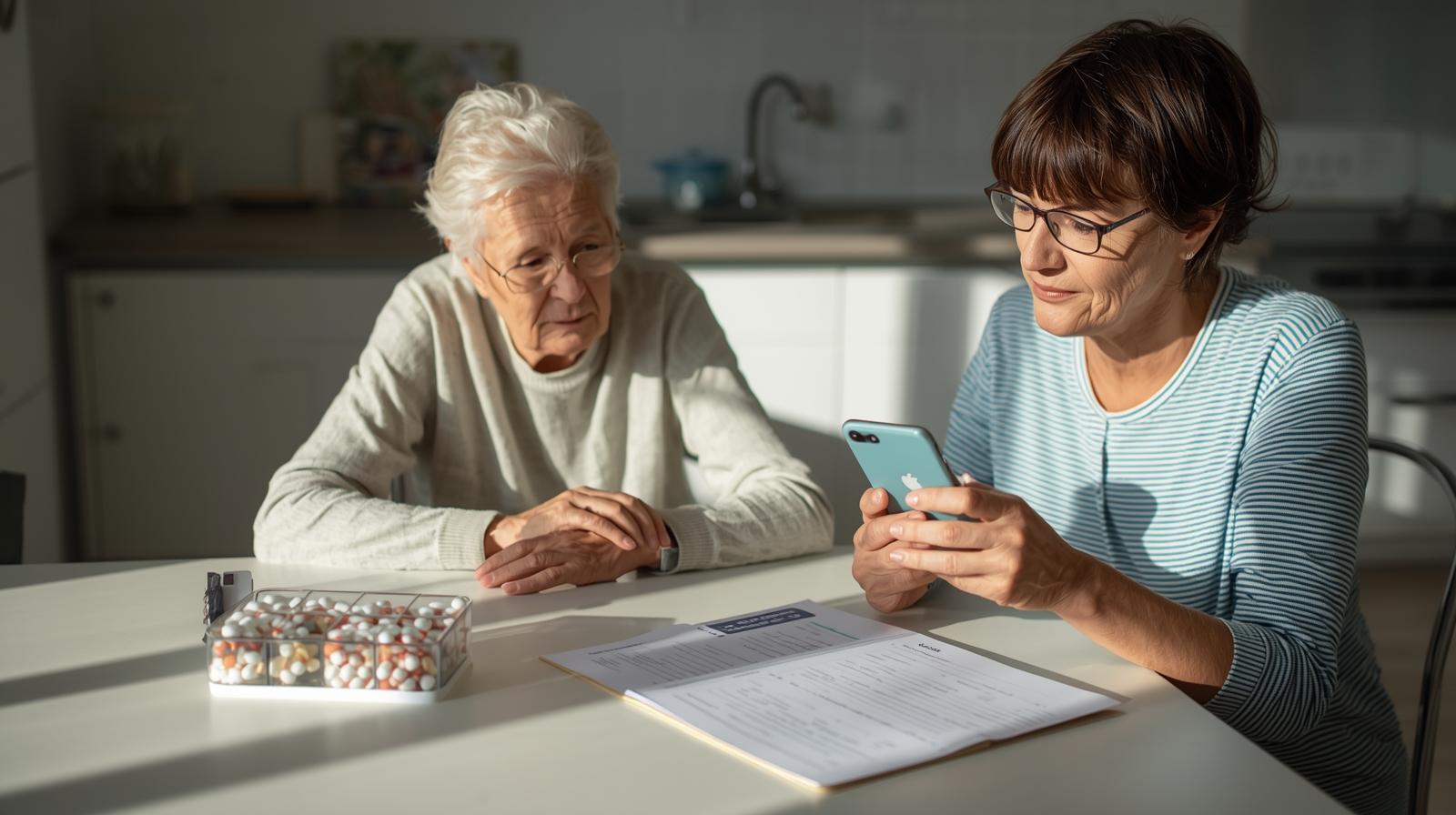
You are standing there with a discharge folder full of papers you barely understand, a medication list that changed while they were in the hospital, and a person you love who is confused, exhausted, and frightened. The hospital bed is made. The IV is out. And now it is just you.
That is the moment nobody prepares you for.
The Numbers That Should Bother Us
Here is the truth. For people living with dementia, the thirty-day readmission rate after hospital discharge can run as high as thirty-five percent. Read that again. One in three. And according to a Yale study, patients with probable dementia were readmitted within six months at a rate of thirty-nine percent. Nearly four out of ten.
Between twenty and forty percent of those readmissions are preventable. Preventable. That word should make you stop and think. It means somebody could have caught the problem before it sent your person back through those sliding glass doors.
Nationally, 3.8 million thirty-day readmissions happen every year, costing the healthcare system over fifty billion dollars. Medicare penalizes hospitals up to three percent of their reimbursements for excess readmissions. In 2023 alone, those penalties totaled $320 million. The system knows this is a problem. The system is trying to fix it. But the system keeps looking at the hospital side of the equation.
Nobody is looking at the kitchen at two in the morning.
What Actually Goes Wrong
I am not a doctor. I am a husband. I am a caregiver. And I will tell you what actually goes wrong in those first thirty days, because I have lived it, and because thousands of caregivers have told me their version of the same story.
The medications change in the hospital, but the old pill organizer is still sitting on the counter at home. The discharge instructions say to watch for swelling or fever, but they do not explain what “watch for” means when your person cannot tell you they feel sick. The follow-up appointment is scheduled for ten days out, and in those ten days, small things start shifting. Sleep gets worse. Agitation rises. Eating patterns change. The caregiver notices, but does not know if it matters. Does not know who to call. Does not want to be “that person” who overreacts.
So they wait. They second-guess. And by the time they act, the ambulance is already on the way.
I have watched this pattern in my own home with Gail, my wife, who lives with vascular dementia. I have watched small signals build into crises that, looking back, were absolutely visible days before they became emergencies. I wrote about recognizing sundowning in a book chapter before I even recognized it happening in my own living room. That is how easy it is to miss what is right in front of you when you are exhausted, frightened, and alone.
The Gap Between Visits
Here is the part the healthcare system has not figured out yet. Hospitals are good at what happens inside the hospital. Clinics are good at what happens during a fifteen-minute appointment. But the life of a person with dementia, and the life of the person caring for them, happens in the hours and days between those touchpoints. It happens at dinner when they will not eat. It happens at bedtime when the agitation starts. It happens on a Tuesday afternoon when the caregiver thinks, “Something feels different, but I cannot explain it.”
Traditional systems do not capture those moments. Discharge paperwork does not capture them. Even home health visits, valuable as they are, only see a snapshot. The continuous, daily, living story of what is happening at home remains invisible to the people who could do something about it.
That gap is where readmissions are born.
What We Built, and Why
AtendaCare exists so home caregivers can care for their Tended (the person they are caring for) longer. That is our mission, twelve words, and every decision we make runs through it.
We built a voice-first AI companion for caregivers. No forms, no clicks, no portals to log into. You talk to Atenda the way you would talk to a knowledgeable friend who happens to be available at two in the morning. You say, “Mom did not eat dinner again tonight and she seems more confused than yesterday.” Atenda listens, asks a few clarifying questions, and logs the observation. Over days and weeks, those observations build into something clinicians have never had before: a continuous, narrative-driven record of what is actually happening at home between visits.
That record, organized into concise summaries a clinician can review in minutes, creates the visibility that traditional charting simply cannot. Providers gain an unfiltered view of daily life. Mood trends. Sleep patterns. Eating changes. Behavioral shifts. The kind of data that, during those first thirty days after discharge, can mean the difference between a phone call to the doctor and another ambulance ride.
How This Changes the Readmission Story
I will not pretend that technology alone solves this. It does not. What solves it is a caregiver who feels supported enough to act early, combined with a clinical team that can actually see what is happening before the crisis arrives.
AtendaCare bridges that connection. When a caregiver talks to Atenda after discharge, several things happen that did not happen before:
Medication changes get tracked in real time. If a caregiver says, “I gave Mom the new blood pressure pill, but she spit it out,” that observation is logged and available for review. No more waiting ten days for the follow-up appointment to discover the medication was never taken.
Behavioral shifts become visible early. Increased confusion. Agitation at night. Refusing food. These are patterns that build over days, and they are exactly the kind of signals that precede a readmission. Atenda captures them as the caregiver naturally describes their day, and organizes them into patterns a clinician can spot.
The caregiver feels less alone. This one matters more than the data, and I say that as someone who respects data deeply. A caregiver who feels heard, who feels like someone is paying attention, is a caregiver who calls the doctor before the crisis. A caregiver who feels alone is a caregiver who waits too long.
Clinician review time becomes billable. Because AtendaCare journals are organized into concise, clinician-reviewable summaries, hospitals and affiliated providers can bill that review time under existing CMS Remote Therapeutic Monitoring and Chronic Care Management codes. The platform does not just reduce cost. It generates revenue.
The Human Math
I am a numbers person. I built businesses on spreadsheets and margins. So let me give you the financial picture, because it matters.
In modeled projections across 1,000 post-acute or dementia-care patients, AtendaCare is designed to deliver approximately $900,000 in annualized savings through improved bed-turn rates, lower overtime costs, fewer redundant tests, and higher patient-satisfaction bonuses. Add reimbursable revenue from journal reviews, and the total system value approaches one million dollars per 1,000 patients.
Those numbers are real and they are significant. But I will tell you what number keeps me up at night.
One. One caregiver. Standing in the kitchen. Wondering if the change they noticed means something. Wondering if they should call someone. Wondering if anyone will listen.
If AtendaCare can be the voice that says, “Yes, that matters, and here is what you should do next,” then the readmission does not happen. Not because of an algorithm. Because a human being felt supported enough to act.
What I Am Asking
I am not asking you to take my word for it. I am asking you to look at the gap. Look at what happens between discharge and the follow-up visit. Look at the caregiver who is carrying the weight of that transition with no tools, no guidance, and no one listening.
Then ask yourself: what if someone was?
AtendaCare is that someone. Not a replacement for clinical judgment. Not a shortcut around the hard work of caring. A companion. A listener. A bridge between the kitchen table and the clinician’s desk.
We are building this because we have lived it. Because I am living it, right now, with Gail. And because the fifty million caregivers in this country deserve better than a stack of discharge papers and a prayer.
If this resonates, I would love to talk.
Gregg Fous, Founder & CEO
Gregg@Atenda.Care | www.Atenda.Care
The caregiving companion that never forgets.
