
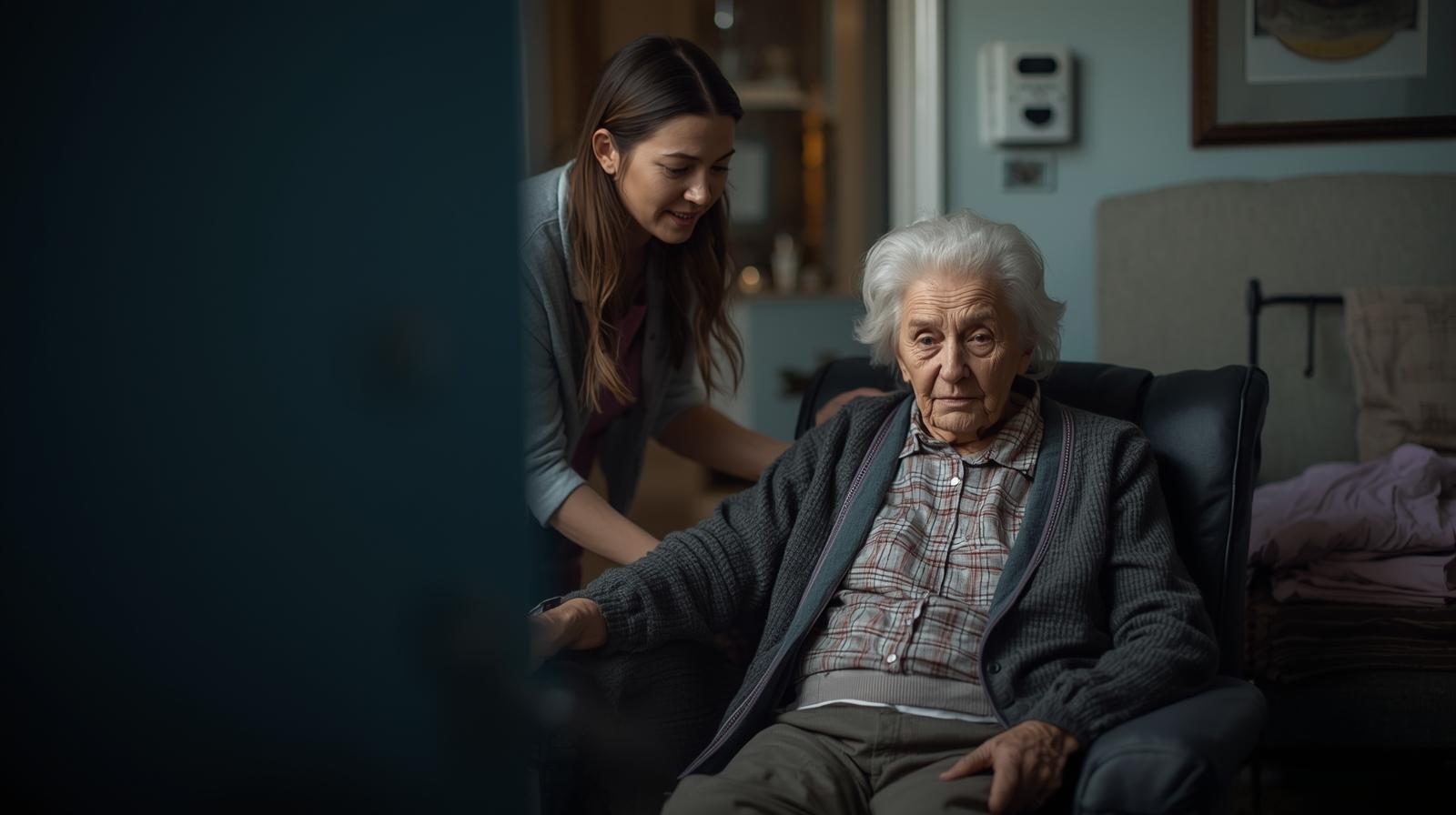
A caregiver’s guide to what nobody tells you about dementia
By Gregg Fous
When people hear the word dementia, they think about memory. They picture someone forgetting names, repeating questions, getting lost on the way home. And yes, that happens. But memory loss wasn’t the first sign I saw.
The first sign was project thinking—the inability to do A, then B, then C. The sequence of making coffee. The steps to get dressed. Not forgetting that she needed to get dressed, but forgetting how. Which comes first, the bra or the shirt? The answer used to be automatic. Now it requires thought, and thought requires a brain that can hold the sequence.
That was my first clue that this disease was going to be bigger than I imagined.
Here’s what I’ve learned after seven years of immersing myself in dementia care: the brain controls everything in the body. Everything. And when the brain stops working properly, the effects show up in places you’d never expect.
Temperature regulation. The person you’re caring for might ask three or four times in an hour to adjust the thermostat—up, then down, then up again. This isn’t them being difficult. This is the part of the brain that interprets hot and cold misfiring. The signal travels from skin to brain, and somewhere along the way, it gets scrambled.
The same thing happens with pain. Some days there’s obvious discomfort—a stubbed toe, a stiff back—and they don’t mention it at all. Other days, something minor feels catastrophic. The pain receptors are working. The brain’s interpretation of them is not.
Vision changes. Not the eyes—the eyes might check out fine at the ophthalmologist. But the part of the brain that processes what they see? That’s affected. Your person might not recognize a can of Pepsi Cola sitting on the counter. They see it. The image enters their eyes. But the brain doesn’t match the image to the memory of what a Pepsi can looks like, or what it means, or what to do with it.
Digestion. Bladder control. Spatial awareness—knowing where the body is in space, which is why someone might miss the chair when they try to sit down. Sleep cycles. The ability to swallow without thinking about it.
The brain controls all of it. And dementia affects the brain.
I almost hesitate to call these things “signs” of dementia. That word makes it sound like they’re clues, like they point to something else. But they’re not pointing to the disease. They are the disease. They are what happens when the brain can no longer coordinate the systems it was designed to run.
Memory loss is one symptom. But dementia isn’t a memory disease—it’s a brain disease. And the brain does a lot more than remember.
Here’s the thing about being a caregiver: you learn this the hard way. You learn it in the moment, when something goes wrong that you never anticipated. The first time your person can’t figure out how to use a fork. The first time they don’t recognize the toilet for what it is. The first time their body does something unexpected because the brain sent the wrong signal, or no signal at all.
And here’s the part nobody warns you about: nobody’s coming to help.
Not really. Not in the way you need.
Friends check in less. Family means well but doesn’t understand. Doctors have fifteen minutes and a prescription pad. The internet has information but not wisdom. Support groups share stories, but you still go home alone to face the midnight crisis, the morning confusion, the endless loop of questions that have no good answers.
Nobody understands the situation better than you do. Nobody has been in your exact room, with your exact person, facing your exact version of this disease. There’s nobody to talk to who truly gets it. Nobody to call at 2 a.m. when you’re out of ideas and out of patience and out of tears.
The cavalry isn’t coming. You are the cavalry.
This is precisely why I developed AtendaCare. Not to replace human connection—nothing can do that. But to give caregivers something they desperately lack: recognition. Understanding. A listening ear that’s always available. Stories about other caregivers who’ve been in the same situation and what they did. Practical wisdom delivered at the moment you need it, in a voice that doesn’t judge.
Atenda was built to delight caregivers. That word—delight—might seem strange in this context. But I chose it carefully. Caregivers are drowning in burden. They’re starving for someone to say, “I see you. I see how hard this is. And here’s something that might actually help.”
Delight is the opposite of burden. It’s the experience of feeling supported instead of alone.
It’s easy to say, “Thank goodness she isn’t falling.” Or “At least he’s not incontinent.” Or “She still recognizes me.” And I understand that gratitude—I’ve felt it myself. We cling to what’s still working.
But it’s quite another thing to be aware that these changes could be on the horizon. To understand that the brain controls balance, and bladder, and facial recognition, and a hundred other functions we take for granted. And to be prepared.
Not resigned. Prepared.
After researching incontinence care, I did something. I ordered the supplies. Disposable bed pads. Barrier cream. The right kind of wipes. Gloves. A changing kit that lives in the bathroom, ready.
We don’t need most of it yet. But if that changes—when that changes—I won’t be scrambling at midnight, trying to manage a crisis without the right tools.
There’s a certain satisfaction in that. A strange kind of peace.
And yes, there’s sadness too. A heaviness in knowing that I have to prepare for these things. That I’m stocking supplies for a future I don’t want. That being a good caregiver means looking clearly at what’s coming instead of pretending it won’t arrive.
But here’s what I’ve decided: preparation is love. It’s the unsexy, unglamorous, deeply practical kind of love that says, “I won’t let you suffer because I wasn’t ready.”
So if you’re caring for someone with dementia, or if you love someone who might be heading that direction, here’s my advice:
Don’t be surprised.
Don’t be surprised when the disease affects things you never expected. When vision changes, or temperature regulation fails, or pain signals scramble, or digestion becomes unpredictable. When the steps of daily tasks become impossible to sequence. When the body starts doing things the brain can no longer control.
The brain controls everything. Dementia affects the brain. The math isn’t complicated.
Learn what’s possible before it becomes urgent. Prepare before you need to. Stock the supplies. Understand the techniques. Know who to call.
And remember: nobody’s coming. You are the one who’s there. You are the one who knows. You are the one who will figure it out, again and again, because that’s what love does.
That’s not pessimism. That’s love with its work boots on.
—
